
Find Maryland Marriage Records
Maryland marriage records are public documents held by the Circuit Court Clerk in each county and by Baltimore City. You can search for marriage licenses, request certified copies, and access historical records going back to the 1600s. This guide covers how to find and request Maryland marriage records from the right office, online databases, and the Maryland State Archives.
Maryland Marriage Records Overview
Where to Find Maryland Marriage Records
Marriage records in Maryland are kept at the county level. The Clerk of the Circuit Court in each county holds marriage licenses and certified copies for marriages that took place in that county. There is no single statewide database that covers current records, so you need to know which county the marriage took place in before you start your search. Under Md. Code, Family Law § 2-401, every marriage in Maryland requires a license issued by the clerk in the county where the ceremony is performed.
The Maryland State Archives holds historical marriage records dating from the mid-1600s through 2013. This is the main source for older records. The Archives has both digital indexes and physical records in their search room at 350 Rowe Boulevard in Annapolis. Their search room is open Tuesday through Friday and on the first Saturday of each month. For recent marriages from 1990 to the present, you will need to go directly to the county clerk.
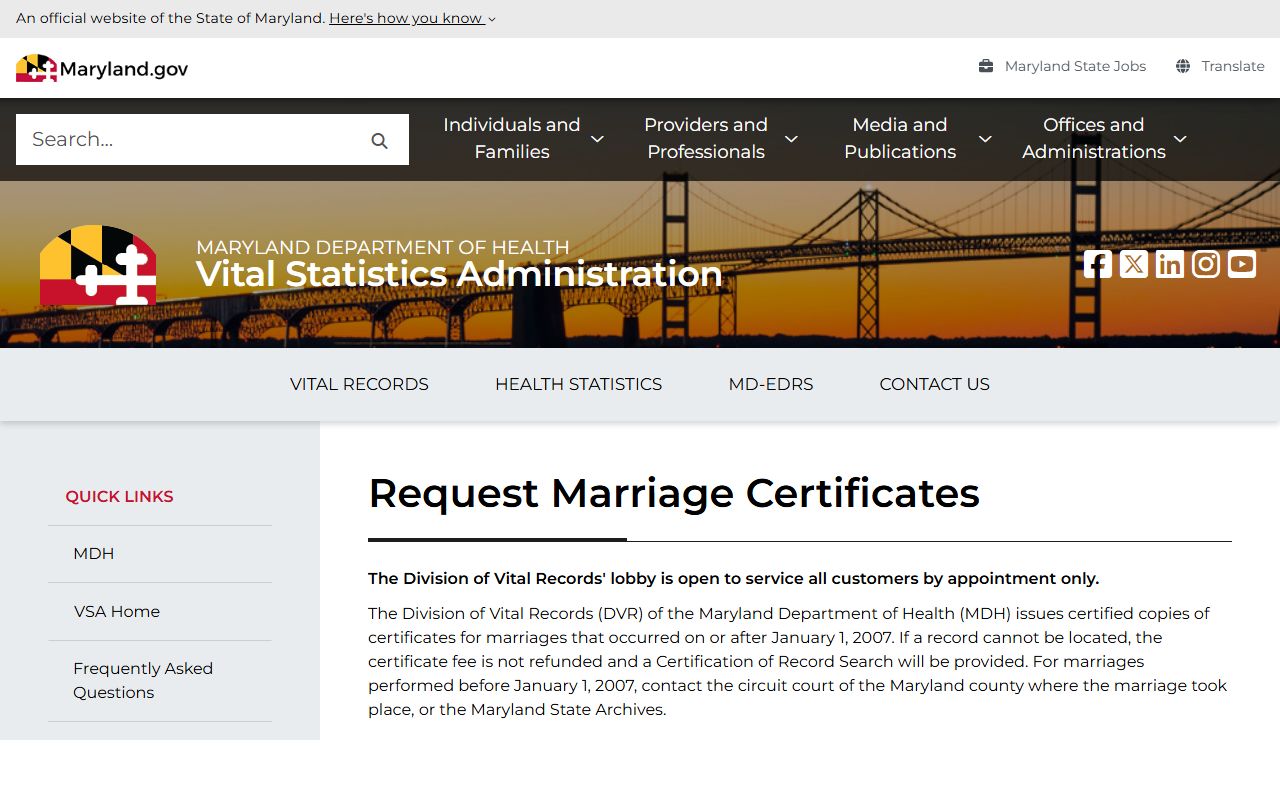
The Maryland Department of Health, Vital Statistics Administration can also provide marriage certificate information. Their records cover marriages reported from 1990 forward. These are separate from the certified copies you get from the Circuit Court.
How to Search Maryland Marriage Records
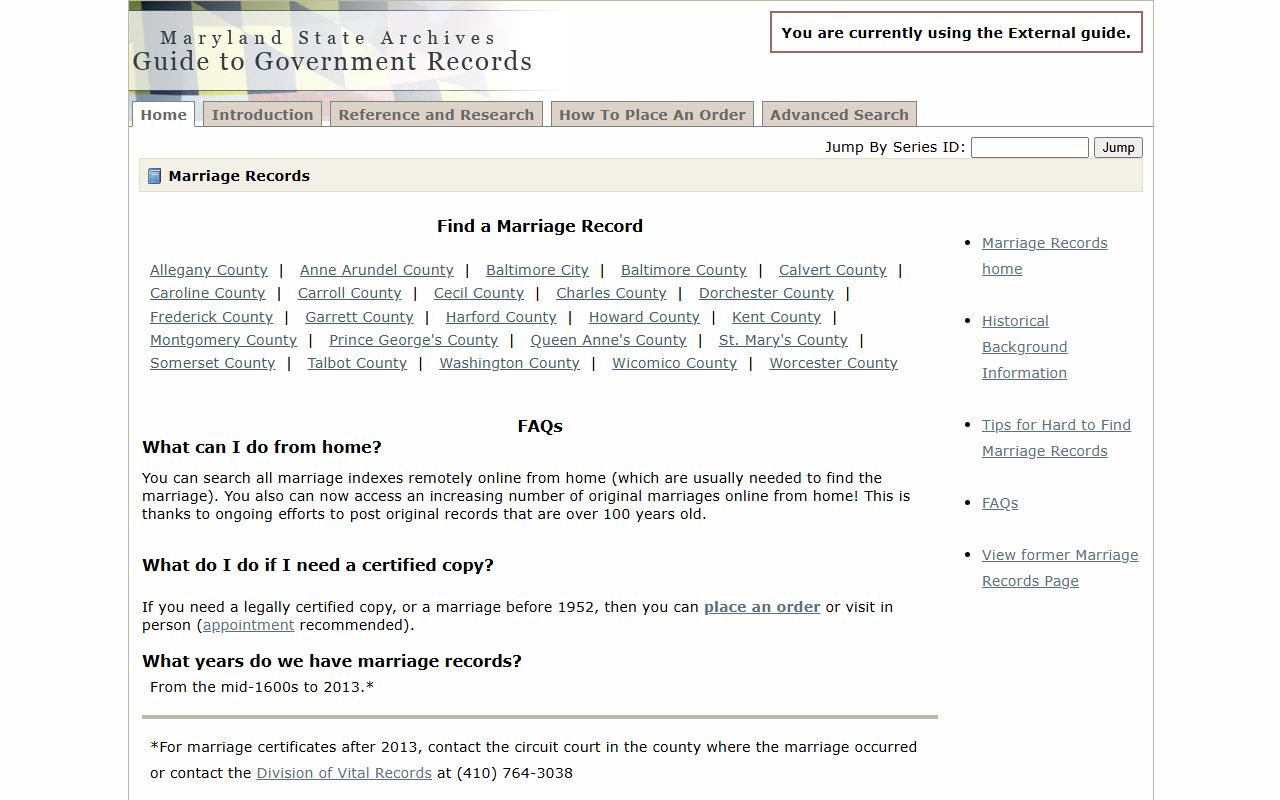
There are several ways to search Maryland marriage records, depending on when and where the marriage took place. For historical research, the Maryland State Archives Marriage Records Guide is the best starting point. It explains what records are available, which are online, and how to find records by county and time period. The guide covers records from the colonial era through 2013.
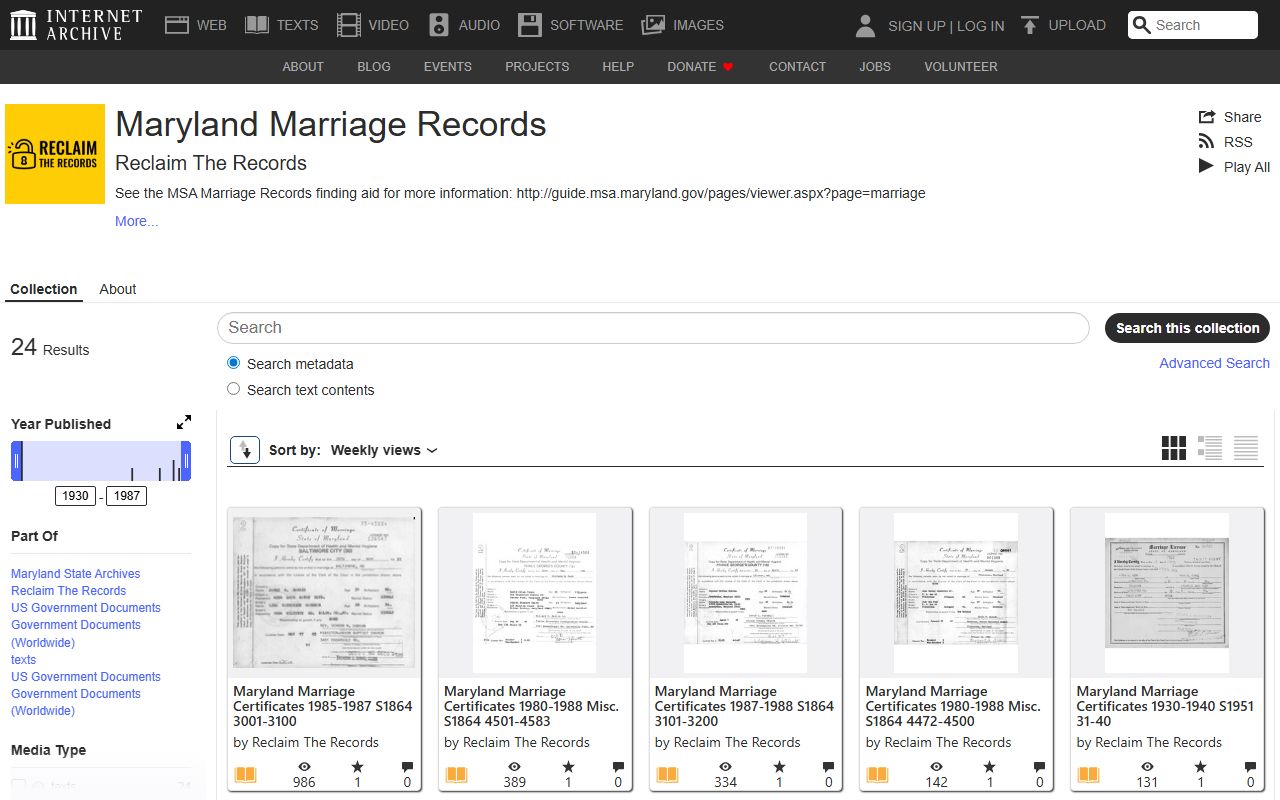
For marriages that took place between 1914 and 1988, the Archives has made a large collection of marriage certificates freely available through the Internet Archive. The Maryland Marriage Records collection on Internet Archive contains actual images of marriage certificates organized by county. This was made possible by Reclaim The Records, which obtained the records through Maryland's public information law under Maryland Code, General Provisions § 4-101 et seq. You can search and view these records for free with no registration.
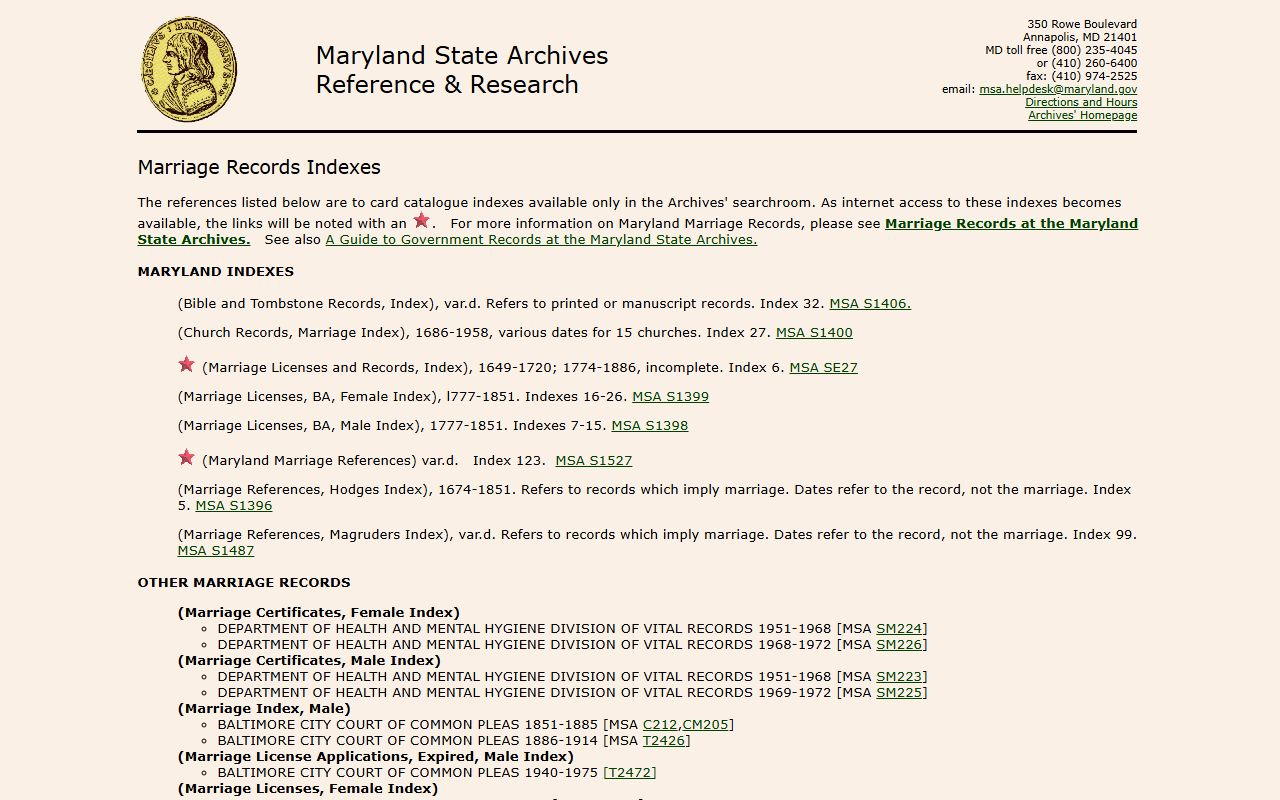
For records from 1951 through 2013, a searchable statewide marriage index is available through the Archives. The Marriage Indexes page at the Archives lists all available indexes by date range and coverage. Some go back to the 1600s, while others cover specific counties or time periods. Most are available for free online search.
Types of Maryland Marriage Records
Maryland marriage records come in two main forms. The marriage license is the document issued before the ceremony. It shows both parties' names, ages, addresses, birthplaces, marital status, and the date the license was issued. Social Security numbers are collected under Md. Code, Family Law § 2-402 but are not printed on the license itself. The license is valid for six months from the effective date.
The marriage certificate is the record created after the ceremony. The officiant must sign it and return it to the county clerk within five days of the wedding, as required by Md. Code, Family Law § 2-409. The certificate shows the date and location of the ceremony, the officiant's name and title, and both spouses' names. The clerk records the certificate and it becomes a permanent public record.
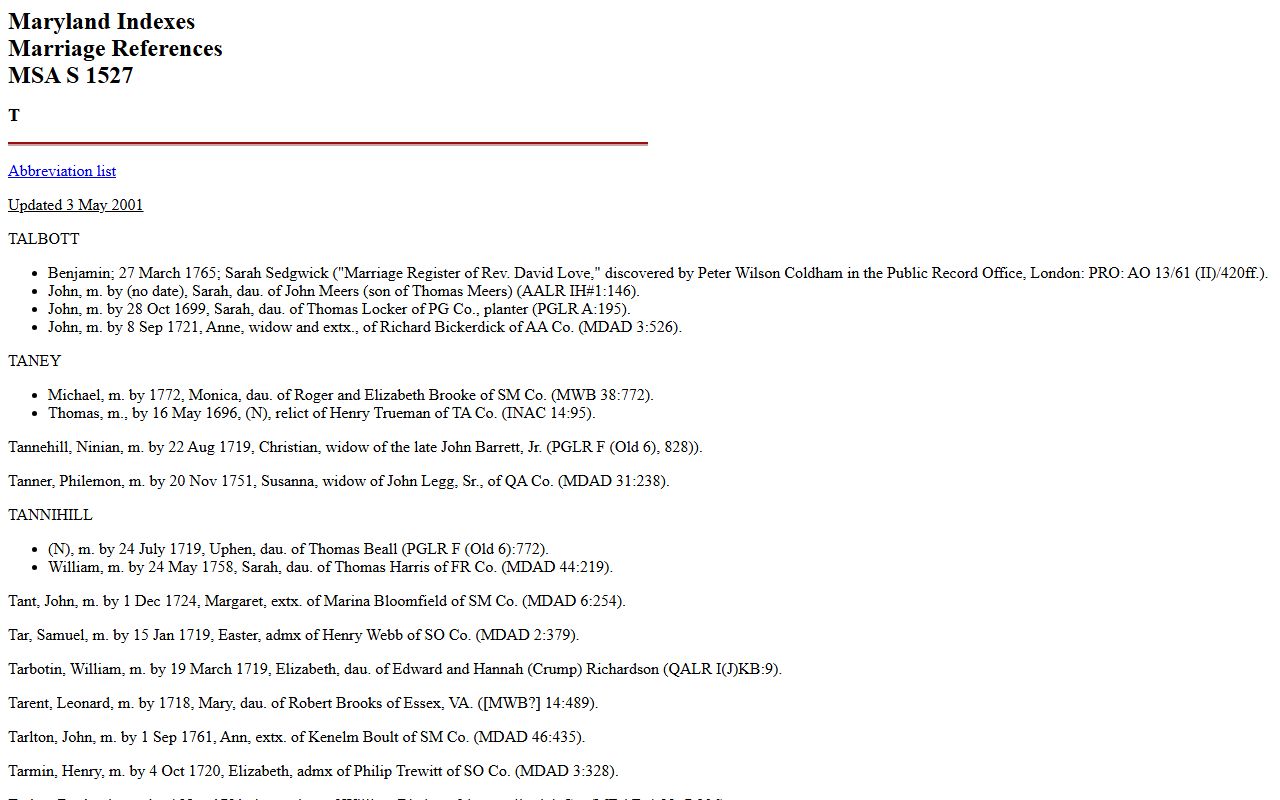
Historical marriage records can contain much more. Records from the 1800s and early 1900s often include race, occupation, place of birth, names of parents, and the name of the minister who performed the ceremony. The Maryland Marriage References database compiled by archivist Robert Barnes pulls together marriage references from diaries, Bible records, and private minister registers. It is free to search online.
Getting Certified Copies of Marriage Records
To get a certified copy of a Maryland marriage license, you contact the Circuit Court Clerk in the county where the marriage took place. The standard fee across most counties is $5.50 per certified copy. Some counties also offer plain copies for $0.50 per page. Under Md. Code, Health-General § 4-217, the Maryland Department of Health charges $12 for marriage certificate copies from their vital records office, which covers marriages from 1990 forward.
Most county clerks accept in-person visits, mail requests, and some accept email or fax requests. For a mail request you typically need to provide both parties' names as they appeared on the license, the date of marriage, and a check or money order made payable to the Clerk of the Circuit Court. Include a self-addressed stamped envelope for faster return. Processing times vary by county but most in-person requests are handled the same day.
Fees for marriage licenses themselves vary by county. Somerset County charges just $25, while Prince George's County charges $70 and Frederick County charges $75. All counties require at least a 48-hour waiting period after the license is issued before the ceremony can take place, as set by Md. Code, Family Law § 2-405. The license is then valid for six months.
Historical Maryland Marriage Records
Maryland has some of the most extensive colonial marriage records in the country. The state required counties to record marriages from 1777 forward, though some records go back much further. The Maryland State Archives holds marriage licenses and indexes for many counties starting in the late 1700s and early 1800s. Several courthouse fires destroyed records in specific counties, including Allegany (1791-1847), Calvert (before 1882), and others, so gaps exist in the historical record.
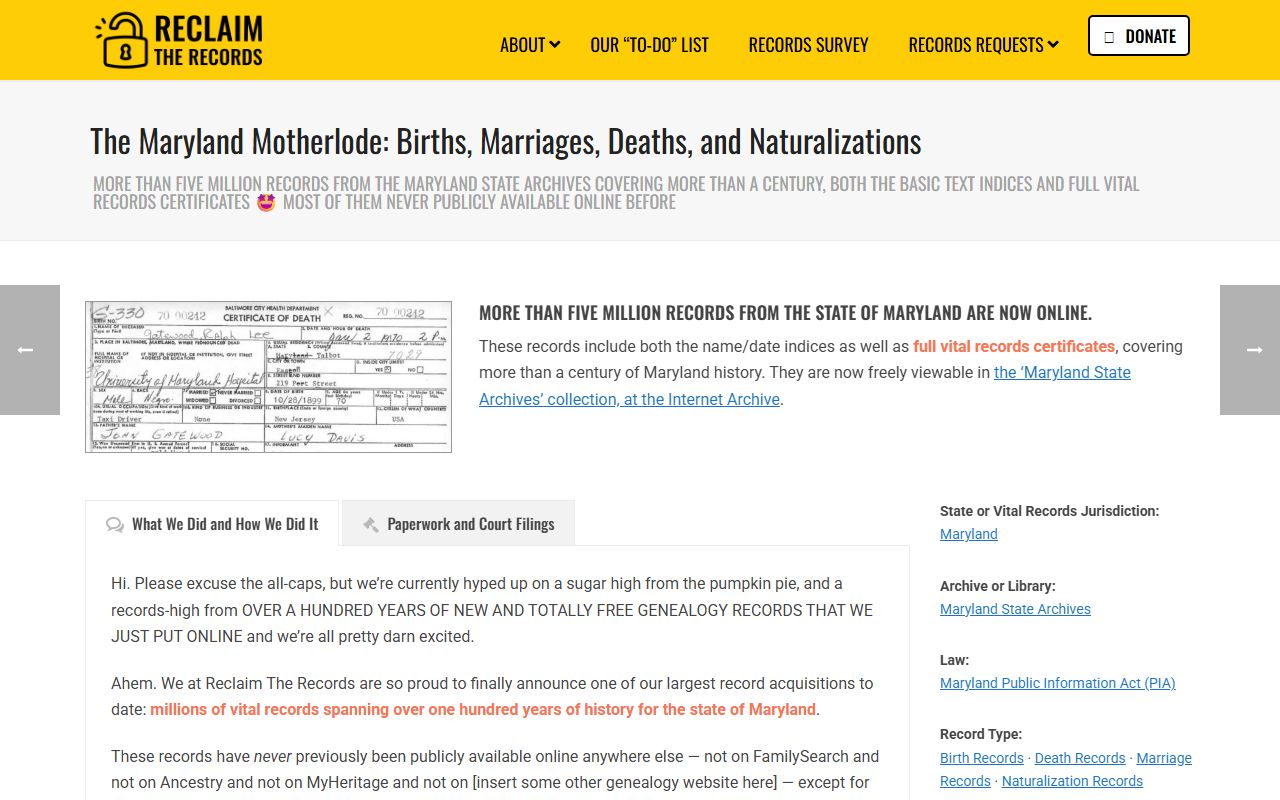
In 2014, Reclaim The Records obtained millions of Maryland marriage certificates through the state's public information law. These were previously only viewable inside the Archives building. The Reclaim The Records Maryland project page explains what was obtained and how to access it. All released records are now freely available on the Internet Archive with no fees or registration required.
The Internet Archive now hosts Maryland marriage certificates for 1914 through 1988 as well as statewide marriage indexes from 1951 to 2013. You can browse by county and year. The records are organized as PDFs and include actual images of the original certificates. This is one of the largest free collections of Maryland marriage records available online.
Note: Records from 1941 through mid-1951 exist at the Archives but have not been scanned. These require an in-person visit or research request to view.
Maryland Marriage License Requirements
To get a marriage license in Maryland, at least one party must apply in person at the Circuit Court Clerk's office in the county where the ceremony will be performed. Both parties must provide their full legal name, current address, age, state or country of birth, Social Security number, and current marital status. If either party was previously married, they must provide the date and location of the divorce or death of their former spouse.
Maryland law under Md. Code, Family Law § 2-301 sets the minimum age for marriage. Persons under 16 may not marry in Maryland. Persons age 17 may marry with consent from each living parent or guardian, along with a court order. Both parties must also disclose whether they are related by blood or marriage under Md. Code, Family Law § 2-202, which prohibits marriages between close relatives.
Who may perform a marriage in Maryland is defined by Md. Code, Family Law § 2-406. Authorized officiants include religious officials authorized by their faith organization, court clerks and designated deputy clerks, and state and federal judges. Civil ceremonies are available at most county courthouses by appointment for $25. Clerks are required to keep a complete marriage license book for all licenses issued, as mandated by Md. Code, Family Law § 2-501.
Additional Maryland Marriage Record Resources
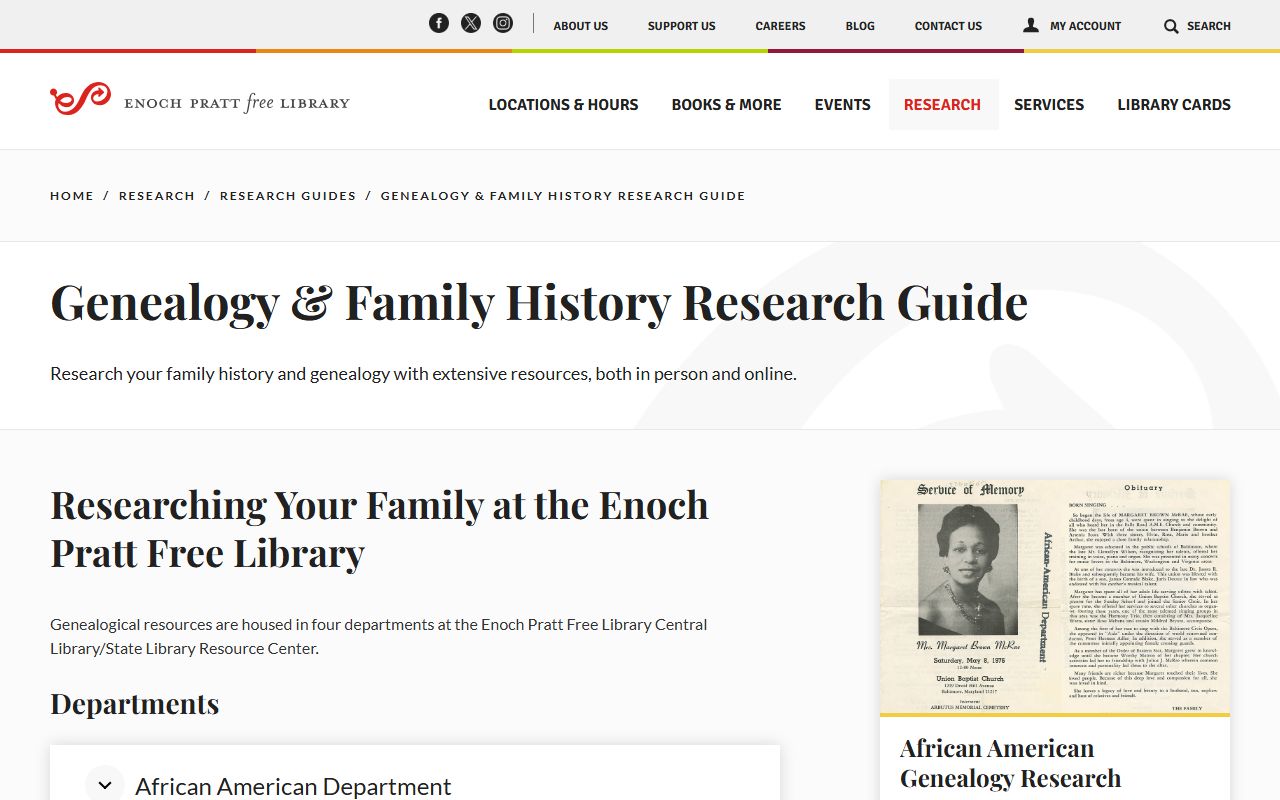
Several organizations maintain additional marriage record collections outside of the official court system. The Enoch Pratt Free Library in Baltimore holds genealogical resources including census records, newspapers with marriage announcements, and Baltimore City directories going back to the 1800s. Their Maryland Department provides up to five free research requests per month.
The Maryland Genealogical Society maintains a members-only database with over 284,000 Baltimore City marriage license records from 1851 to 1919. This is the first searchable index to include brides' names from this era. The Washington County Free Library has a unique online marriage record index covering 1861 to 1919 and 1927 to 1949, plus images of actual marriage records from 1886 to 1970. This is one of the few county-level collections with free online image access.
The Howard County Historical Society has a searchable database of over 38,000 ministers' returns of marriage licenses from 1860 to 1939 at hchsmdsearch.org. Records in this collection show birthplace, occupation, parental consent, and minister name. People's Law Library at peoples-law.org provides plain-language information on Maryland marriage license requirements and who may officiate ceremonies.
Note: Access to recent marriage records (1990 to present) through the Maryland Department of Health is restricted under COMAR 10.03.01.08, which requires requesters to show a direct and tangible interest in the record.
Browse Maryland Marriage Records by County
Each Maryland county has a Circuit Court Clerk who keeps marriage licenses and records for marriages that took place in that county. Select a county below to find local contact information, fees, and access options.
Marriage Records in Major Maryland Cities
Residents in Maryland's major cities file for and access marriage records at the Circuit Court for their county. Select a city to find the right courthouse and local resources.